About Michael

I was 49 years old before I knew what it felt like to look at someone and see myself.

Black adoptee. White family. Thirty years in education. And a story I spent most of my life trying to figure out how to tell.

The Beginning

Nobody handed me a manual.
And nobody handed you one either.

I grew up in Lincoln, Nebraska, adopted into a white family who loved me completely and understood almost nothing about what I was carrying. Not because they didn't care. Because no one had ever given them the language for it.

I grew up in white neighborhoods. Went to white churches. Sat in classrooms where I was usually the only Black face in the room. And I learned, the way you learn when no one says it out loud, that who I was at my core was something we didn't talk about.

That silence wasn't mean-spirited. But it was costly. A child who never sees himself reflected in the world around him, who never hears his heritage spoken about with pride, who never has a single adult in his life who looks like him — that child starts to believe the different thing about him is the wrong thing.

I was that child. And I carried it for decades.
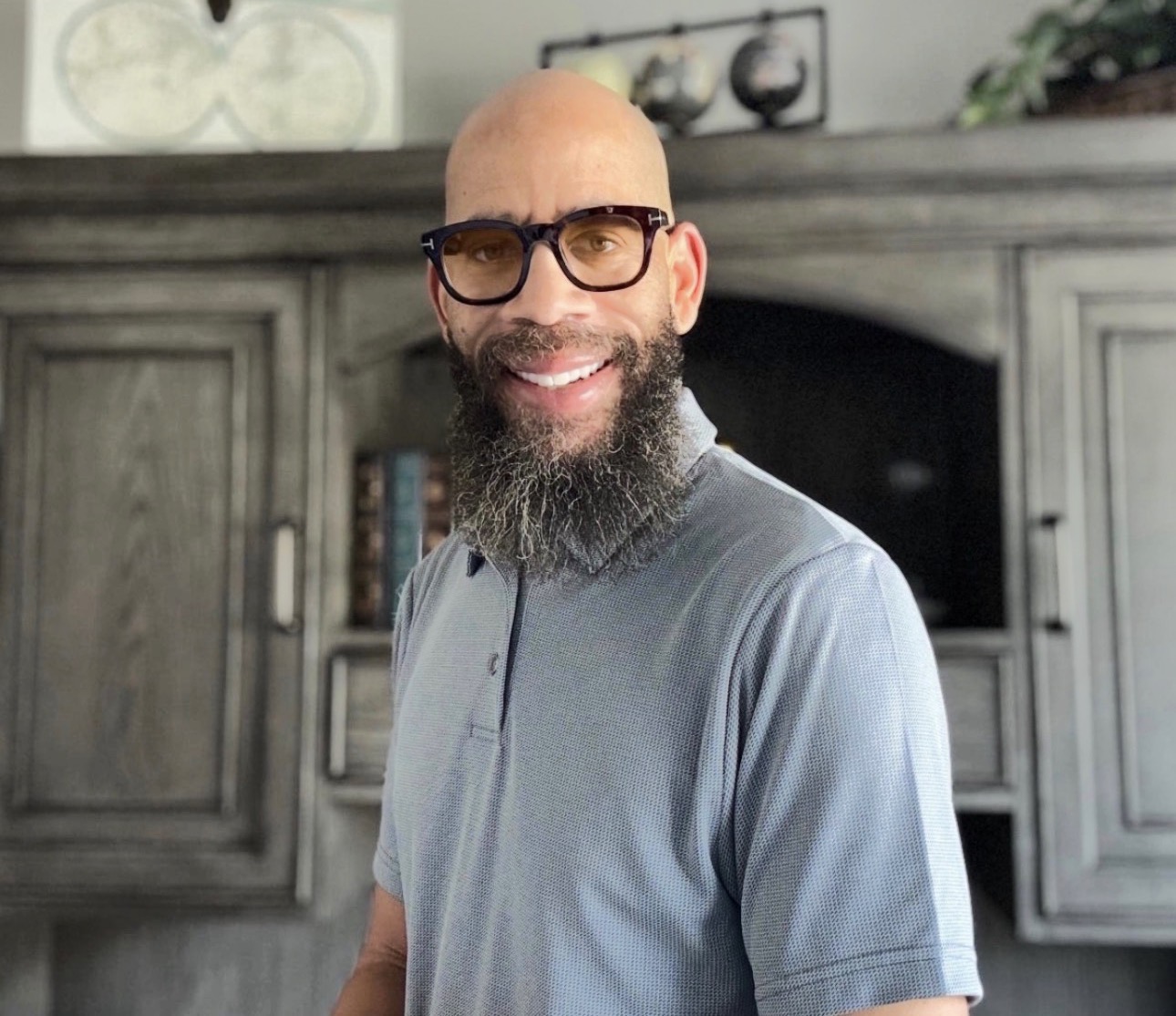
Michael Gaither, founder of Beyond the Moment Adoption Studio
"This isn't about being a bad parent. It's about being a more honest one."
— Michael Gaither
49 Years Later

When I finally found my biological family,
I understood what I had been missing my entire life.

I had built a full life by the time it happened. A career. A family of my own. A professional reputation I was proud of. And still, there was something I couldn't name — a gap that no amount of success or belonging ever quite filled. When I connected with my biological family at 49, I finally understood what that was.

For the first time in my life, I looked at people and saw myself. My face in someone else's face. My laugh coming out of someone else's mouth. Features I'd spent my whole life carrying alone, suddenly reflected back at me.

That experience taught me something no book ever could. The absence of that reflection doesn't go quiet. It just goes underground. And it shapes a person in ways that can take decades to understand — long after the childhood that caused it is over.

That is why this studio exists. Not to make white adoptive parents feel guilty. To give them what my parents never had — the perspective from the inside. The things I needed them to know before it was too late to say them.

The Work

Thirty years inside schools taught me to see what silence does to a child.

Teacher

I started in the classroom, where I saw firsthand what happens when a child's identity is treated as something to manage rather than something to celebrate.

Principal

As a school principal, I watched families navigate race with silence and good intentions and confusion — and I recognized the pattern from my own childhood every single time.

Leader

As a district administrator and executive leadership coach, I learned what it actually takes to build the capacity in people to have the conversations they've been avoiding.

Thirty years in education gave me the professional language for what I had lived personally. The two things together — the lived experience and the professional expertise — are the foundation of everything in this studio.

The Book

"I Was Your Black Child"

What White Parents Raising Black Children Need to Hear Before It's Too Late

I'm writing the book I needed someone to hand my parents when they brought me home. Not a research summary. Not a policy paper. The things I actually needed them to know, told from inside the experience of being the child they were trying to raise.

Every chapter comes from something I lived. Something I carried. Something I finally have the language to say. It is the most honest thing I've ever put on paper, and it is for every white parent who loves their Black child and knows there is more they could be giving them — they just don't know what it is yet.

The guides, the coaching, and the content in this studio exist right now while the book is being written. They are drawn from the same place.

Start Here

The free guide is where this begins.

Seven conversations every white parent needs to know how to have with their Black child. Written by someone who needed every one of them and never had them.

"White parents raising Black children are doing something brave and something hard. I know because someone did it for me. I also know what was missing."
— Michael Gaither